Thursday, December 28, 2006

Welcoming the New Year


Well, Xmas has come and gone even before I can say "cheese!" The weather has been a sporadic mixture of wet and dry in Kuching, can't say it's the same for the rest of the state and Borneo island since Kuching region is known to be the wettest region of all. It was nice and warm in Kuching on Xmas day, so I guess it was a pretty good Xmas. But let's not forget those who were traumatised and made homeless by the floods in the state of Johore (south of Peninsular M'sia), about 90,000 people the last time I read the news, and the Taiwanese population affected by the very recent earthquake on Tue 26 Dec. And before that of course the landslides in the Philliphines and the quakes/tsunami in Sumatra. Ok plenty more across the world. My point is - be thankful for what you have, folks. I'm typing this right now in the comfort of my s.o.h.o. with semi-torrential rainfall serving as my background symphony for the evening, it's 6 minutes past 10pm and, yes, I'm pretty much thankful.
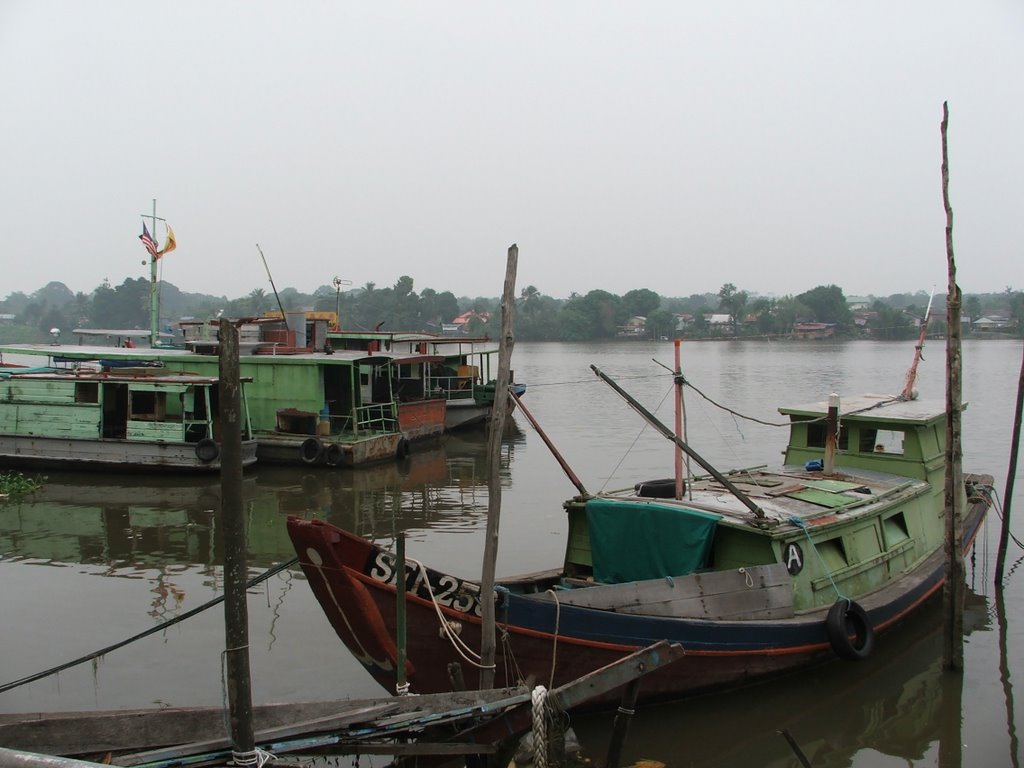
Happy New Year 2007 to all. May the new year provides a more positive outlook to life here in the Island and the rest of the Planet. Enjoy the photo, I took this November this year while the haze was still around. A nice, idyllic view of Sarawak River.

Sunday, December 17, 2006

Christmas in Borneo

And what would Christmas be like in Borneo you might ask? Not any different from the rest of the world I would think. After all, it's about being around people who matter most to you. What people in general here love doing during a festive season such as this is to do house visits. Yep, to go to friends' houses for a Xmas visit, enjoy some food (rather sumptuous meals for some people), indulge in some small talk (mostly catching up with the entire 11 months in half an hour) and of course the inevitable question, what's your new year resolution? Even though it's still a good 5 days to the New Year.
Whatever it may be for you, let this Xmas be one of happiness and joy with your loved ones wherever you are.

Monday, November 27, 2006

Borneo Orang-Utans

I remember reading this news in the local papers earlier in the month and I found it in the net again, just occured to me whether all the campaign and promotion to help save the orang-utans of Borneo has actually bore any fruit or are all of us merely watching the annihilation from the comfort of our personal computers and LCD TV screens. Read on if you haven't done so:
1000 orangutans perished this year in forest fires that raged across Borneo and Sumatra according to a conservationist interviewed by Reuters. Willie Smits, an ecologist at the Borneo Orangutan Survival Foundation in Indonesia, told Reuters that the fires forced hungry orangutans into agricultural areas where they were killed as pests. Orangutans are known for feeding on fruit of oil palm and other crops in fields adjacent to forest areas. "Orangutans are starving. They are sick and many of those we are treating were injured after being attacked by machetes," Smits told Reuters. He added that many orangutans that came to conservation centers are suffering from respiratory problems caused by the haze.
Reuters said that there were an estimated 56,000 orangutans in the wild as of 2002 but that the population has dropped about 6,000 per year. This past August, the Wildlife Conservation Society-Indonesia Program said that Indonesia's population of orangutans stands at 20,000, down from 35,000 in 1996. Environmental groups have warned that red ape could be extinct in the wild without urgent conservation measures. Recently WWF has launched the "Heart of Borneo" campaign to pressure Indonesia's government to protect orangutan habitat by establishing reserves and cracking down on illegal logging and oil palm plantations. Nevertheless, the outlook for Orangutans is not promising. Indonesia has an appallingly high deforestation rate and seems impotent in reigning im illegal forest clearing. In recent years neighboring countries have become increasingly vocal in criticizing Indonesia's lack of progress in addressing forest fires.
In Kuching, the Semenggok Wildlife Rehabilitation Centre is home to several ex-captives orang-utan families that have been rescued from poachers and smugglers. Pay a visit to the Centre if you're in Kuching, it's a good 40 minutes drive from the city centre heading out through an area known as Kota Padawan or Mile 10.

Thursday, November 23, 2006

Forests of Borneo & Mt. Kinabalu

In case you don't know, Borneo is primarily mountainous, with dense areas of rain forest mainly in Sarawak. The highest peak in Borneo, Mt. Kinabalu, stands at 13,455 ft. That's in Sabah. With a generally hot, wet climate, rain is more common than not, with some portions of Borneo receiving between 150 and 200 inches of rainfall annually. Between October and March, monsoons buffet the island. Given the abundance of rainfall, it makes sense that Borneo's flora is among the most diverse in the world. Borneo has nearly 11,000 species of flowering plants, about a third of which are indigenous. How dense is the vegetation? In one 16 acre area of Borneo's lowland forest, over 700 species of trees have been recorded. In comparison, there are only 171 native tree species in all of eastern North America. That's enough to tell you that to be lost in Borneo jungles would really give even the most experienced of trackers a hell of a hard time.